Gestational Diabetes

Breakfast day of screening
During my 25th week I went to get screened for gestational diabetes (GD), as typical with all pregnancies around weeks 24-28.
A screening can help identify if there a chance you have it, and more specific follow up tests will be done based on these results to confirm if necessary. Before the Oral Glucose Tolerance Test, I was only allowed to eat eggs and drink water the morning of, nothing else. Good thing my appointment was in the morning! Then, I quickly finished my glucose drink within 5 minutes (keeping it cold helps with the taste) and got my blood drawn exactly one hour later. This measures how much of the sugar was depleted in an hour, since we know exactly how much glucose we put in (50 g).
Why does GD happen?
Hormones that are made by your placenta make it more difficult for you to process sugar or any processed carbs due to increasing insulin resistance. In order to cope with the high energy demands of pregnancy, significant changes happen to the maternal metabolic/energy and endocrine/hormone states. Maternal insulin resistance will typically develop during mid-late pregnancy in response to placenta-made hormones, including placental Growth Hormone. Being in a state of slight insulin resistance can actually ensure that baby gets enough maternal glucose for all of those growth and energy needs, not just enough glucose for mom. So it’s not your fault, nature is at work taking care of baby! However, developing a lot of insulin resistance and GD detectable on the test should be managed. These natural hormonal changes are also why healthy moms should gain some fat (~5.5 lbs on average), in addition to everything else, from baby to breast tissue and fluids (3).
So, GD is not always caused by eating too much sugar/carbs, although those that are prediabetic prior to pregnancy (and may not even know it), eat excessive sugar/carbs regularly, or have genetic predisposition are at risk for developing it.
If there's a chance you have diabetes/prediabetes (pregnant or not), an A1C blood test can show some insight. In the blood, the glucose can bind to the hemoglobin A molecule in your red blood cells for up to 120 days — this is actually the cell's lifespan. Thus, this test measures the percentage of hemoglobin A bound with glucose, known as “glycated hemoglobin”, or “HbA1c”, that has built up over those past few months. Unlike the screening discussed, this is a more accurate/specific test to determine if you have diabetes, and can also help monitor changes to your health.
The mechanisms behind GD:
The main issue with GD is the impact it can have on baby. If you have high levels of blood sugar, so will your baby as maternal glucose will cross the placenta. The baby’s pancreas pumps out a lot of insulin. If they need to make more and more insulin to package away all that excess sugar, two things can happen:

First of all, while in the womb, baby is receiving excessive amounts of sugar and therefore has to package it all away, and so their brown fat cells will get bigger. Brown fat is great because it keeps babies warm when it's chilly (it also keeps bears warm in hibernation), and helps store some extra energy for when it's needed. Babies have more brown fat than yellow, while adults are the opposite. However, too much fat isn't healthy, plus having a fatter baby unfortunately increases baby's shoulder dystocia risk or mom's delivery complications at birth. Fun fact, we don't grow more fat cells when gaining weight, rather our current fat cells just get larger as we pack in more storage.
Secondly, they can develop a condition called congenital hyperinsulinism. It is a rare but serious condition where a baby's pancreas secretes excessive insulin because that excess sugar needs to be put away. This in turn can cause severe, persistent hypoglycemia (low blood sugar). After birth, the sugar supply from mom suddenly stops, but the baby’s insulin levels remain high. That causes the baby’s blood sugar to drop quickly, which can show up as jitteriness, irritability and trouble feeding. More severe symptoms can include seizures, so immediate treatment is crucial to prevent brain damage, often involving medications like diazoxide or surgery (1).
2 easy solutions...

There are many ways to mitigate the risk of diabetes and build easy lifestyle changes. Diet changes include not just eating less carbs & sugar (obviously), but also eating more fiber. If you eat your salad before the carbs/pasta on your plate, the glucose from the pasta will be gradually absorbed into your blood stream (because of the mixed-in salad fiber) therefore you don't get a huge sugar spike and need a bunch of extra insulin to take it to fat storage. Less of a spike can therefore prevent hyperinsulinemia long-term. Another example of this mechanism is eating a whole apple that contains fiber, pectin, etc, vs drinking the same amount of apple juice that just sends all the freely-available sugar right through, directly to the blood stream.
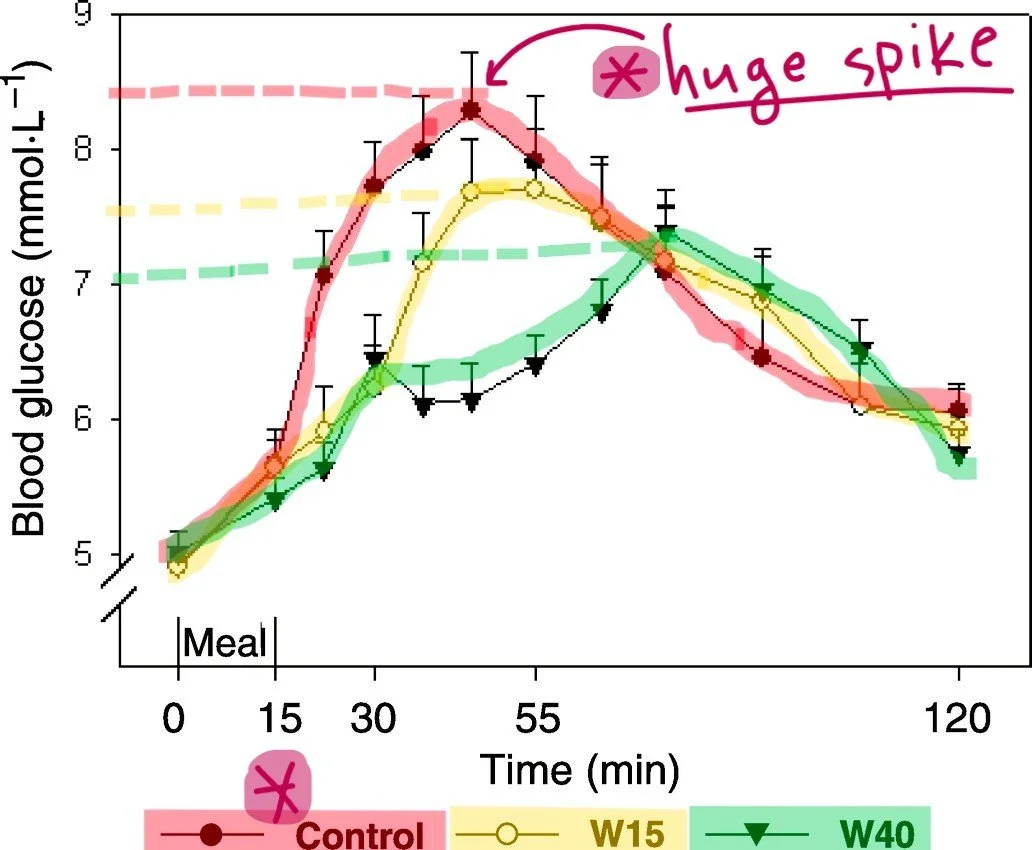
This graph shows blood glucose after eating when either resting (higher levels) vs walking (immediately lowers blood sugar significantly). This study tested slow post-meal walking for 15 mins (W15) or 40 mins (W40). (4)
My favorite easy lifestyle modification is walking after eating. These days I've been waking up really hungry and grabbing a bite before walking my dog every morning. Studies show that moving optimally within 15 minutes of eating can help lower blood glucose levels. And there's no complicated science to it — your body will lower blood glucose by either 1) storing excess glucose in your fat cells, or 2) your muscles can immediately eat that sugar for energy. Studies show that even a 10-15 minute slow walk right after eating can achieve this effect, and you therefore avoid that huge glucose spike after meals. Alternatively, doing seated or standing calf raises can also have significant impact on blood sugar levels even though the soleus muscle is only 1% of your total body mass (2). Amazing! Another *bonus* is that these simple movements prevent you from feeling as boggy because you're proactively avoiding that sugar spike. This is because you don't dump a bunch of insulin into your system, rather your muscles are actually using the glucose in real-time. You may have felt super sleepy soon after eating a huge or carb-based meal — and migrating to the couch — because of high insulin levels. A 3rd *bonus* is squeezing/using your calves helps with venous blood return which can get quite congested during pregnancy, especially as we approach 3rd trimester. Benefits all around!
References:
Krawczyk S, Urbanska K, Biel N, Bielak MJ, Tarkowska A, Piekarski R, Prokurat AI, Pacholska M, Ben-Skowronek I. Congenital Hyperinsulinaemic Hypoglycaemia-A Review and Case Presentation. J Clin Med. 2022 Oct 12;11(20):6020. doi: 10.3390/jcm11206020. PMID: 36294341; PMCID: PMC9604599.
Hamilton MT, Hamilton DG, Zderic TW. A potent physiological method to magnify and sustain soleus oxidative metabolism improves glucose and lipid regulation. iScience. 2022 Aug 5;25(9):104869. doi: 10.1016/j.isci.2022.104869. PMID: 36034224; PMCID: PMC9404652.
Kaur, H., Muhlhausler, B. S., Roberts, C. T., & Gatford, K. L. (2021). The growth hormone–insulin-like growth factor axis in pregnancy. Journal of Endocrinology, 251(3), R23–R39. https://doi.org/10.1530/JOE-21-0087
Nygaard, H., Tomten, S. E., & Høstmark, A. T. (2009). Slow postmeal walking reduces postprandial glycemia in healthy women. Applied Physiology, Nutrition, and Metabolism. https://doi.org/10.1139/H09-110
